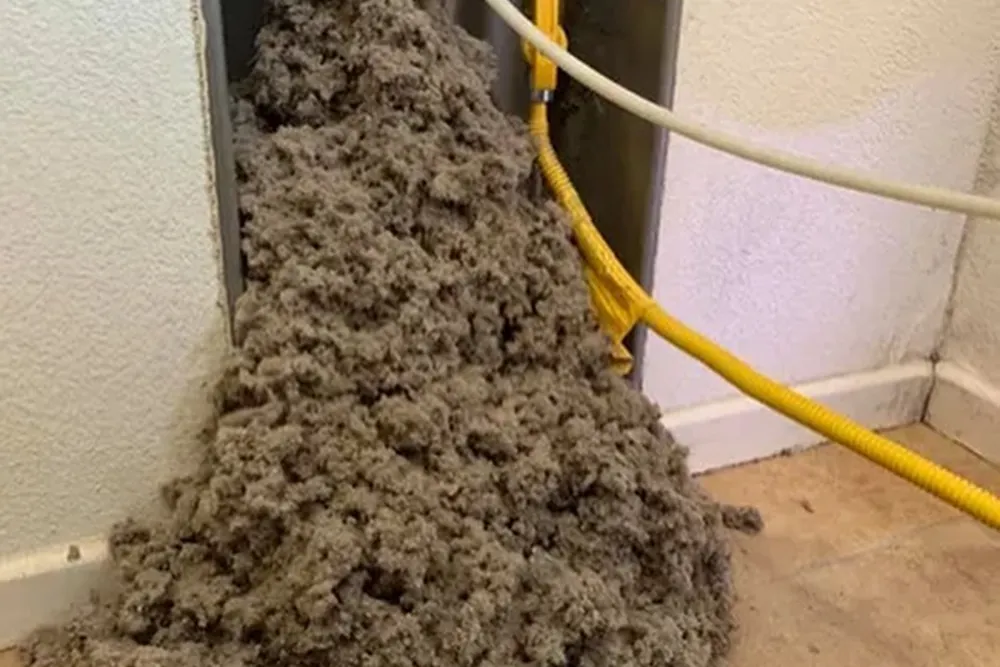
Usually yes. A camera inspection plus an airflow reading tells us where the run stops carrying air, and lint or moisture staining on drywall confirms it.
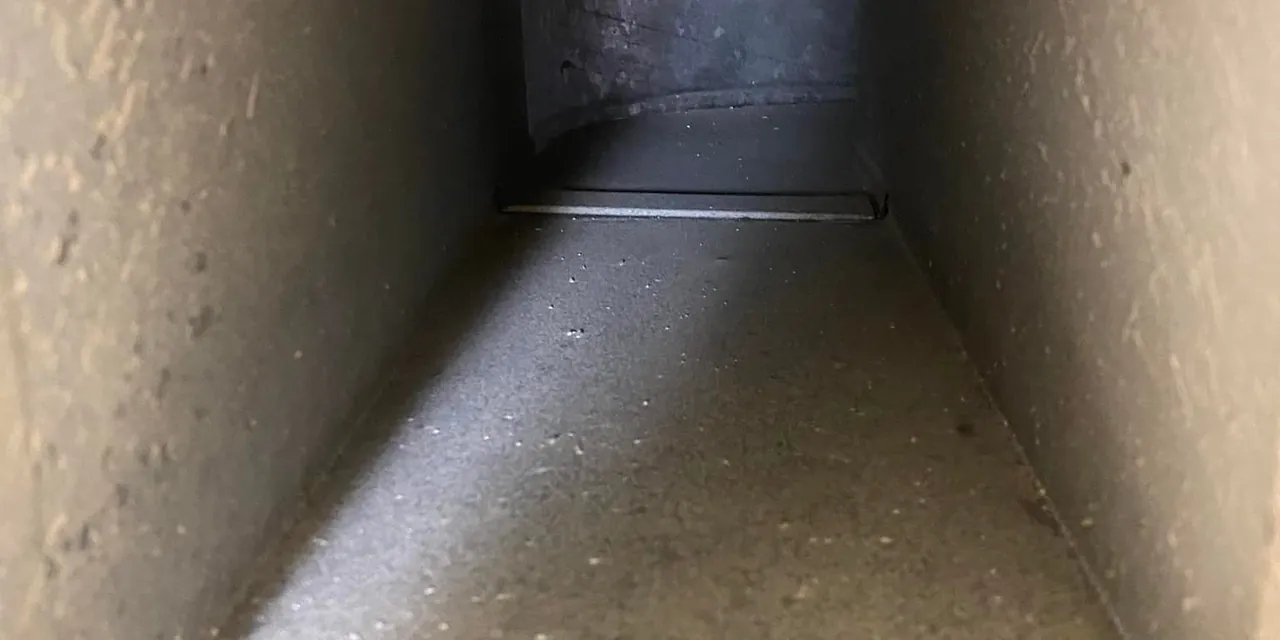
Dryer Vent Repair & Replacement in Highlands Ranch, CO
A clean duct only helps if the duct itself is intact. We routinely find transition hoses crushed flat behind the dryer, foil pipe that has torn open inside a wall cavity, and vent hoods whose flaps rusted shut years ago — all of which strangle airflow no matter how recently the vent was cleaned.
Every repair we make uses rigid or semi-rigid metal duct, foil tape instead of screws inside the run, and a properly sized hood at the exterior. That is what the manufacturer's manual and the building code both ask for, and it is what keeps the vent working for years rather than months.


What's included
Transition hose replacement
The flexible section between the dryer and the wall swapped for semi-rigid metal, sized so the dryer sits close to the wall without crushing it.
Disconnected duct repair
Ducts that came apart inside a wall, ceiling or crawlspace are located, rejoined and sealed — no more lint blowing into the structure.
Vent hood replacement
New exterior hood with a working damper, in metal rather than plastic, sealed against the siding.
Duct rerouting & shortening
Long, over-elbowed runs re-routed to the shortest practical path to restore airflow.
Plastic & foil duct removal
Vinyl and thin foil duct is a known fire hazard. We remove it and replace it with metal.
Roof and wall terminations
Correct termination away from soffits and windows, with pest screening only where code allows.
Book dryer vent repair & replacement
Serving Highlands Ranch, Littleton, Lone Tree, Centennial, Parker, Castle Rock and the rest of the south Denver metro. Estimates over the phone are free and the price is agreed before we start.
Call (720) 545-5983 Request a quote onlineGood Questions
Questions About Dryer Vent Repair & Replacement
Can you tell if my duct is disconnected without opening the wall?
Do you use screws to join duct sections?
Never inside a dryer duct — screw tips catch lint. We use foil tape and clamps.
Is flexible foil duct allowed?
Manufacturers and the residential code both call for rigid or semi-rigid metal. Thin foil and vinyl duct should be replaced.
How often should a dryer vent be cleaned?
For most households, once a year. If you have a large family, pets that shed, or a duct run longer than about 15 feet, plan on every six months. Homes where the dryer vents through the roof also tend to need more frequent service.
What are the signs that my dryer vent is clogged?
Clothes still damp at the end of a normal cycle, drying that needs two or three cycles, a dryer that is hot to the touch, a burning or musty smell, a laundry room that gets hot and humid, lint gathering around the outside vent hood, or a vent flap that no longer opens when the dryer runs.
Why does a clogged dryer vent matter?
Two reasons. Safety first: the U.S. Fire Administration attributes roughly 2,900 residential dryer fires a year, and failure to clean the vent is the leading cause. Second, cost: a restricted vent forces the dryer to run longer on every load, which raises your energy bill and shortens the life of the machine.
Photo Gallery
Recent Work
Real jobs, real ducts, photographed on site. Every image on this site is our own work — no stock photography.