It can be. Restricted airflow lets heat and lint build up together, and failure to clean the vent is the leading contributing cause of the roughly 2,900 residential dryer fires reported in the U.S. each year.
Published · Updated · by Dryer Vent Cleaning For You
A blocked vent announces itself long before it becomes dangerous. Here are the seven signals, in the order people usually notice them.
Almost nobody calls us because they decided it was time. They call because the dryer started behaving oddly and someone eventually connected it to the vent. These are the seven symptoms, roughly in the order they show up.
1. Clothes are still damp at the end of a cycle
This is the first and most common. A dryer works by moving heated air through the drum and carrying moisture out through the duct. Restrict the duct and the moisture has nowhere to go, so it stays in the clothes. If a normal cycle no longer finishes the job, start here before you blame the machine.
2. Drying takes two or three cycles
The natural response to symptom one is to run it again. That works, which is why people put up with it for months. Two cycles means you are paying twice the energy for every load, and the dryer is running twice as long at elevated temperature.
3. The dryer or the room gets hot
A dryer that is uncomfortable to touch on the top or the sides is not shedding heat the way it should. If the laundry room itself becomes noticeably warm and humid during a cycle, exhaust air is being pushed back into the room instead of outside.
A hot dryer casing is the symptom to take most seriously. Heat that cannot escape is what turns lint into a fire.
4. A burning smell
Lint is fuel, and a restricted duct lets it sit against hot surfaces. A burning or scorched smell during a cycle means stop using the dryer and get the vent inspected before running it again. This is not a wait-until-next-week symptom.
5. Lint around the outside vent hood
A little lint at the hood is normal. A visible accumulation around the outside of it means airflow is dropping lint at the exit rather than carrying it clear, which usually means there is more of it further back up the run.
6. The exterior flap does not open
The single best DIY test. Start the dryer, go outside, look at the hood. Working airflow pushes the damper flap open. If the flap stays shut or barely lifts, the run is restricted — or the flap itself has seized, which is its own problem worth fixing.
7. It has simply been a long time
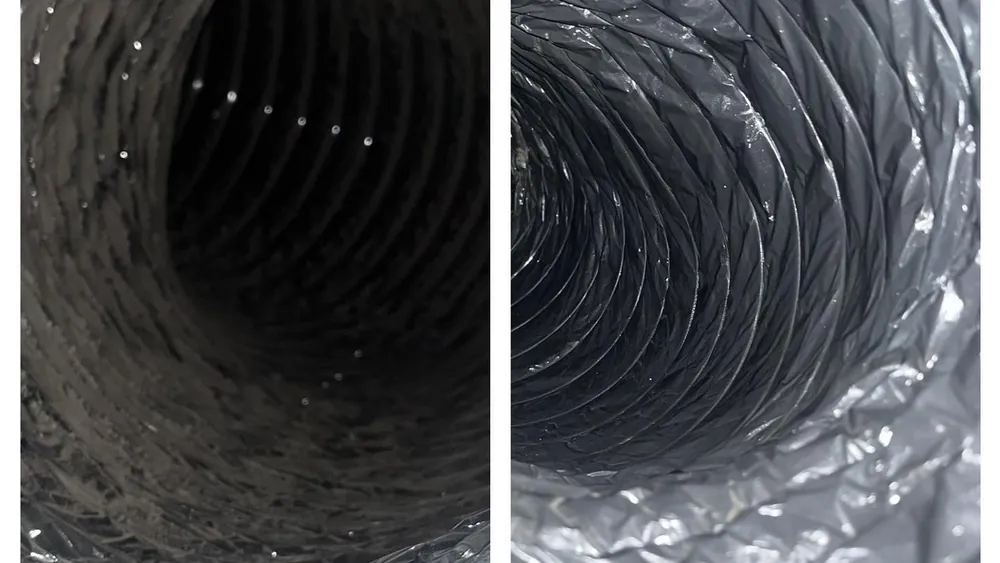
If you cannot remember the last cleaning, or you moved in and have no idea whether the previous owner ever did it, that is a symptom too. On a duct that has gone twenty years, the lint is compacted into a dense lining that no longer resembles the fluffy stuff in the lint trap.
What to do next
- Do the flap test outside. It takes two minutes and tells you a lot.
- Pull the dryer out and check the transition hose. If it is crushed flat behind the machine, that alone can be the problem.
- Check the material. White vinyl or thin foil duct should be replaced with rigid or semi-rigid metal regardless of how clean it is.
- If the run is long, hidden, or terminates at the roof, get it inspected properly — those are the ones you cannot assess from either end.
Recognise three or more of these? A camera inspection with a written report is $79, and it is waived when you book it together with a cleaning.
Call (720) 545-5983Request a quoteFor what a full service actually includes, see dryer vent cleaning. If the duct itself has failed rather than just filled up, that falls under dryer vent repair.
Need this done rather than explained?
We are a family owned company in Highlands Ranch serving Littleton, Lone Tree, Centennial, Parker and the rest of the south Denver metro. Estimates over the phone are free.
(720) 545-5983 Request a quoteMore reading
Good Questions
Related Questions
Is a clogged dryer vent dangerous?
How can I tell if my dryer vent is blocked without tools?
Run the dryer and look at the exterior vent hood. If the damper flap is not pushed open by the airflow, the run is restricted.
How often should a dryer vent be cleaned?
For most households, once a year. If you have a large family, pets that shed, or a duct run longer than about 15 feet, plan on every six months. Homes where the dryer vents through the roof also tend to need more frequent service.
What are the signs that my dryer vent is clogged?
Clothes still damp at the end of a normal cycle, drying that needs two or three cycles, a dryer that is hot to the touch, a burning or musty smell, a laundry room that gets hot and humid, lint gathering around the outside vent hood, or a vent flap that no longer opens when the dryer runs.